Disclaimer:
The information on this website is for general guidance only and does not constitute financial or investment advice. Always do your own research and seek personalised advice from a qualified financial adviser or mortgage adviser before making financial decisions.
Key Takeaways
- A native plant still needs to suit the site's soil, drainage, exposure and climate; watering and maintenance needs vary during establishment and by species.
- Suitable native planting can provide food or habitat for wildlife, but outcomes also depend on garden design, surrounding habitat and pest management.
- Use local planting guidance to match species to the region and the specific site's soil, drainage, sun, wind and frost conditions.
- A well-designed native garden can be as visually striking as any traditional garden style.
- DOC uses eco-sourcing mainly for restoration planting; for a home garden, ask about provenance where ecological restoration is the goal and still match each plant to the site.
A native garden can use New Zealand species, but “native” alone does not mean a plant will suit a particular property's soil, drainage, exposure or climate.
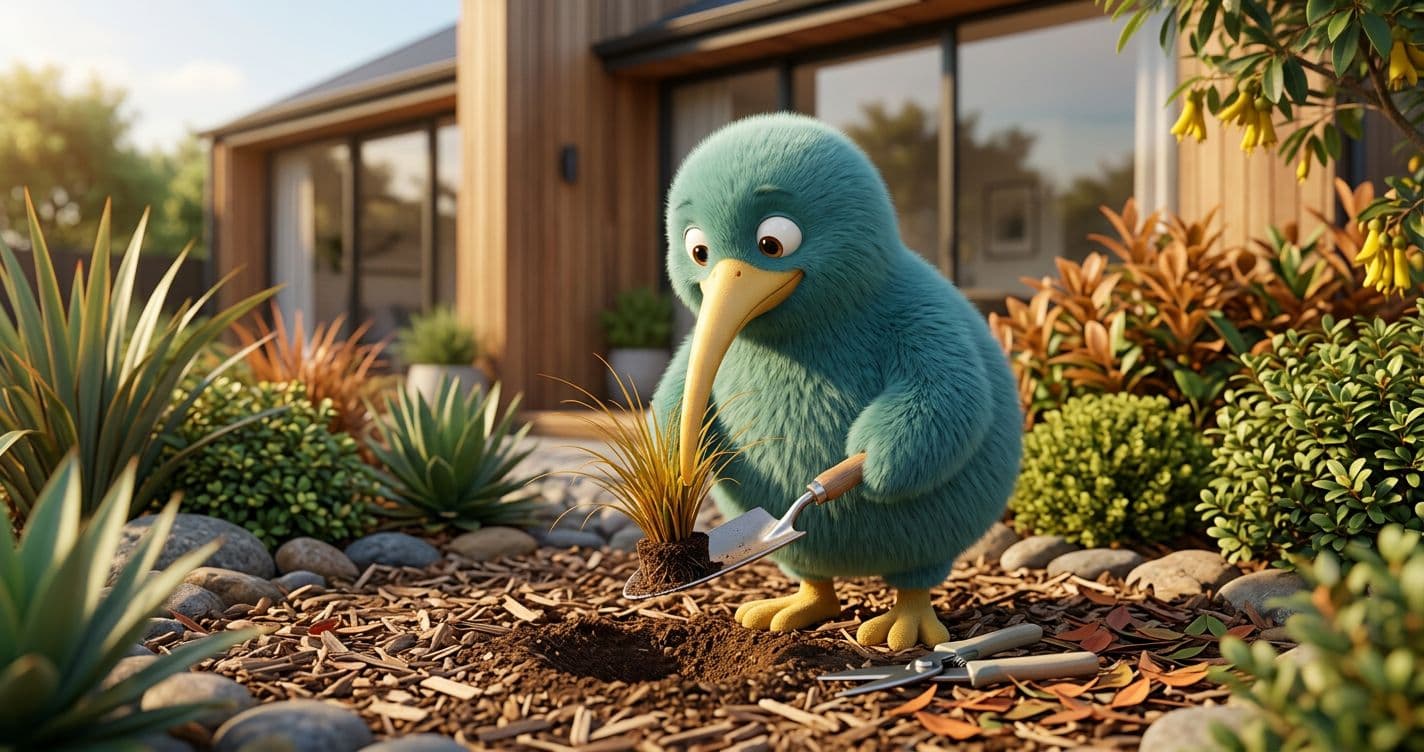
There is a persistent misconception that native gardens are somehow less attractive than traditional landscaping, that choosing native plants means settling for a wild, unkempt look. Nothing could be further from the truth. Native New Zealand plants offer extraordinary diversity of form, texture, and colour, and modern native garden design has come a long way from the untamed bush plantings of previous decades.
Native species have different natural ranges and site requirements. A well-matched plant may need less input after establishment, but watering, soil amendments, weed control and ongoing care depend on the species and site.
Why Native Plants Make Sense
Plant origin does not by itself determine garden performance. Compare mature size, soil, drainage, exposure, water, pest and maintenance needs for each species rather than assuming every native or non-native plant will behave the same way.
Native plants can still be affected by unsuitable soil or exposure, weeds, pests, drought and weather. Monitor establishment and use local guidance to choose species and provenance appropriate to the site.
- Water: Needs vary by species, soil, exposure and weather; new plants may need watering while roots establish.
- Maintenance: Weed, pest, pruning and soil-input needs are species- and site-specific; do not assume a native plant needs none.
- Wildlife: Suitable species can provide food or habitat, alongside appropriate pest management and surrounding habitat.
- Seasonal interest: Check local flowering, fruiting, foliage and mature-size information when designing the planting mix.
- Resilience: Match species and provenance to the site's current conditions and consider exposure to drought, wind, frost and flooding.
Choosing the Right Plants for Your Garden
New Zealand has remarkable plant diversity, with different species naturally occurring in different regions, altitudes, and microclimates. A plant that thrives in coastal Northland may struggle in frosty Canterbury, even though both are native New Zealand species.
DOC defines eco-sourcing as collecting seed or cuttings from nearby, similar ecosystems for native restoration. It can improve the likelihood that restoration plants suit local conditions, but DOC says it is used mainly for restoration rather than gardens and it does not guarantee establishment.
Start by visiting a native plant nursery that specialises in locally sourced stock. The staff can advise which species suit your conditions, including challenging situations like coastal salt spray, heavy clay soils, deep shade, or frost-prone hollows.
- Screening and hedging: Griselinia, corokia, pittosporum, lacebark. These dense-growing species create effective privacy screens.
- Specimen trees: Kowhai, pohutukawa, puriri, totara. Striking focal points with seasonal flowers or distinctive form.
- Ground covers: Select native grasses, sedges or other low plants for the site's light and moisture; coverage and weed suppression depend on spacing, growth and maintenance.
- Coastal gardens: Flax, pohutukawa, ngaio, coastal tree daisy. Salt-tolerant species that handle exposed conditions.
Designing a Native Garden
Native gardens work best when designed with the same principles applied to any good garden: considering height, form, texture, colour, and seasonal interest. The difference is your plant palette, not your design approach.
Need personalised guidance?
Chat with a Homeowners Club affiliated mortgage adviser, conveyancer, insurance adviser, or builder — no obligation.
Have a question about this?
Post it in the Homeowners Club forum — get answers from the community and industry professionals.
Layer your planting with tall trees at the back or centre, medium shrubs in the middle ground, and lower-growing plants and ground covers at the front. This creates visual depth and mirrors how native plant communities naturally organise themselves.
Texture is a particular strength of native plants. The architectural fans of flax, the fine feathery foliage of leptospermum, the bold glossy leaves of karaka, and the delicate lacework of tree ferns can combine to create gardens as visually sophisticated as any formal design.
- Plant in groups of the same species for natural impact rather than dotting single plants around.
- Include plants that flower at different times for year-round bird attraction.
- Where appropriate, retain habitat features such as leaf litter while managing fire, access, moisture, pest and property-maintenance risks for the site.
- If considering water, check child safety, drainage, maintenance and pest implications before deciding whether a pond or water feature suits the property.
Establishment and Care
Establishment time and watering needs vary by species, stock, soil, exposure and weather. Monitor soil moisture and plant condition, follow supplier or local guidance, and adjust watering rather than relying on a fixed two-summer rule.
MPI guidance says mats or mulch can slow weeds, trap moisture and protect roots from frost. Use suitable biodegradable material, check for weed seeds and keep mulch away from each plant's base.
Do not assume every native plant needs no fertiliser or should receive a standard spring feed. Check the species, soil and product directions, and seek local horticultural advice before adding fertiliser or other amendments.
Attracting Wildlife
Suitable native plants can provide nectar, fruit, shelter or host habitat, but planting does not guarantee particular insects or birds will arrive. Results depend on species, season, surrounding habitat and pest pressure.
Use local wildlife-planting guidance to select nectar-, fruit- and shelter-producing species that naturally suit the area and site. Check mature size, toxicity, maintenance and pest implications before planting.
A garden can add habitat or food resources, but its ecological value depends on suitable species, connection to surrounding habitat, establishment success and ongoing weed and pest management.
Useful New Zealand homeowner resources
For the most accurate current rules, check official New Zealand sources as well as this guide. These links help verify lending settings, budgeting assumptions, building requirements, and property-risk information.
Official and independent sources
Related property ecosystem guides
- First Home Buyers Club
Guides, calculators, and adviser support for buying your first home in New Zealand.
- Property Investors Club
Rental property, cashflow, tax, lending, and portfolio-growth resources for NZ investors.
Frequently Asked Questions
Related Articles
Waste Reduction for Homeowners: A Practical NZ Guide
Learn practical waste reduction strategies for your NZ home. From composting to smart purchasing, discover how to reduce landfill waste and

Creating Outdoor Living Spaces: A Complete NZ Guide
Transform your backyard into functional outdoor living areas. Learn about decking, pergolas, outdoor kitchens, and what consents you need in
Reducing Water Usage in Your Home
Practical tips for NZ homeowners to reduce water consumption. Learn about efficient fixtures, rainwater harvesting, greywater systems, and s